An Ideal Student Activity: Volunteer Interpreter Guides—Improving Language Skills While Learning About Japan
An Ideal Student Activity: Volunteer Interpreter Guides—Improving Language Skills While Learning About Japan
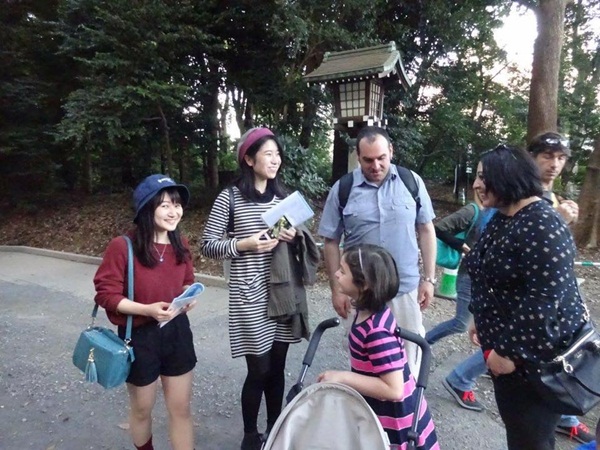
We spoke with Sae Iida (far left, graduate of Tokyo University of Foreign Studies), who served as the 2017 leader of the volunteer interpreter guide program and even created a full-scale guide text for Meiji Shrine as her graduation thesis.
What inspired you to join the volunteer interpreter guide activities?
I joined in the winter of my second year at university. I wanted more opportunities to speak English, and I had already been interested in interpreter guiding. Since it was a student-led organization, I felt comfortable participating. Also, influenced by my mother, who loves shrines and temples, I was drawn to the refreshing atmosphere, which helped keep me motivated to continue.
What was your experience like once you started?
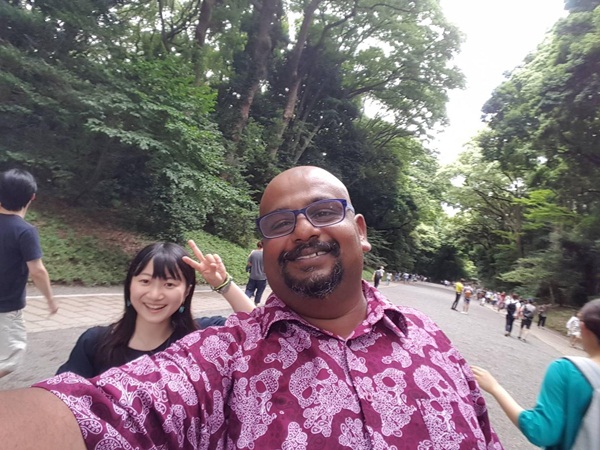
At first, I felt a bit hesitant about approaching foreign visitors on my own. However, as I kept trying, I gradually got used to conversations and started to enjoy it. I also wanted to provide more satisfying tours, so I began researching shrines on my own.
Even if you are not confident in your English at first, senior members will guide you in the beginning. You can learn by accompanying them and gradually becoming accustomed to the role.
As a leader, what did you pay attention to?
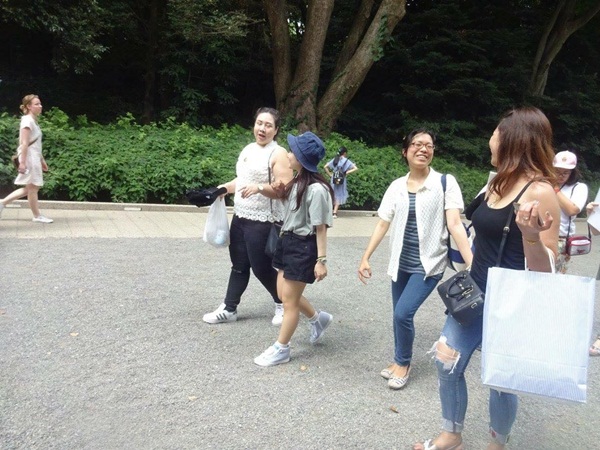
Participants had varying levels of English ability, so I made sure that both beginners and experienced members could enjoy the activity. We worked in groups and supported each other.
Since it can take time to truly feel the enjoyment of guiding, I tried to assign simple roles to beginners so they could actively participate from the start.
Did this activity help with your job hunting?
Yes, very much. When I talked about my volunteer interpreter guide experience, many interviewers showed strong interest. Since it is a socially meaningful activity, I believe recruiters valued it highly.
Although I did not join the activity for job-hunting purposes, it became a major strength and talking point during my job search.
What motivated you to choose Meiji Shrine guiding as your graduation thesis topic?
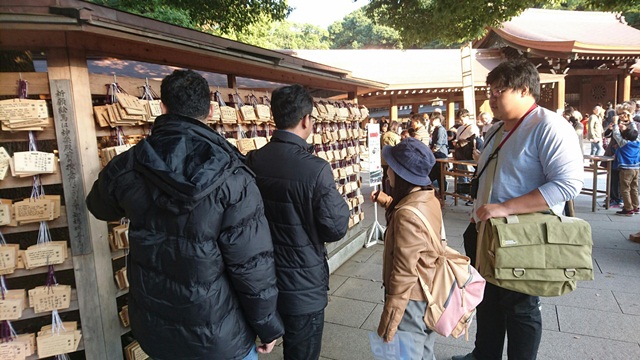
There are many books about Meiji Shrine and Shinto, but I felt that academic texts were too difficult, while tourist guidebooks did not fully convey their true appeal.
As I continued my research, I developed a desire to create something more comprehensive and practical—something that could actually be used in real guiding situations.
Fortunately, I was able to have the content reviewed by a Shinto priest I became acquainted with. For translations, professors at Tokyo University of Foreign Studies were very supportive. Native instructors checked not only the English but also the Korean, which is my major, and provided valuable feedback.
I structured the material in a conversational format so it could be used in real guiding activities. I was very happy to hear that junior members are using it.
It became quite a large project, but I was able to complete it with the help of many people. I also created the illustrations myself using an iPad drawing app—which, unexpectedly, took quite a lot of time!
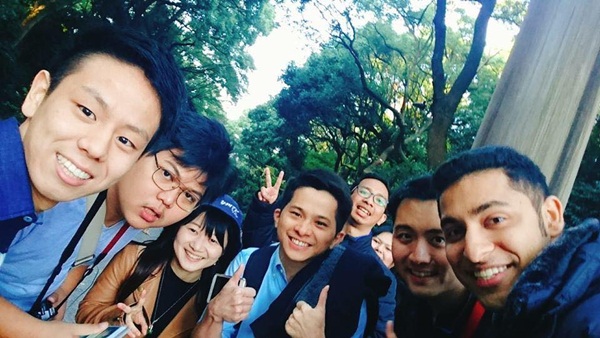
Final message
As I graduate this spring, I truly believe this activity is extremely meaningful for students.
It not only helps improve language skills but also provides an opportunity to learn about Japan. Another great aspect is meeting people from all over the world at Meiji Shrine.
I still stay connected via Facebook with people I met there, and I was also able to make friends with students from other universities who share an interest in international exchange.
For students like me who major in languages, gaining a deeper understanding of Japanese culture is very important.
With the increasing number of international visitors leading up to 2020 and beyond, I strongly encourage many students to participate in this activity.
I would be very happy if you could make use of the English–Korean bilingual guide I created!
Although Ms. Iida was originally rather quiet and reserved, she gradually discovered the joy of volunteer interpreter guiding through repeated participation. Eventually, she even created a full-scale bilingual guide as her graduation thesis.
The guide is written in a dialogue format, making it easier to read and use. We encourage you to start by reading it in Japanese, and if you are even slightly interested, please consider joining one of the regular activity sessions.
Recruitment information:
https://gc-volunteer-guide.jimdosite.com/[*1]
Meiji Shrine Guide (English–Korean bilingual, created by Ms. Iida):
https://www.yokosojapan.net/article.php/20180201meijishrine_editor_ja
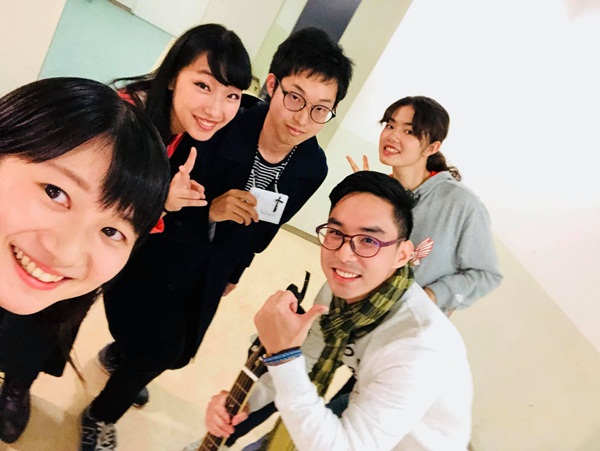
In addition, Ms. Iida and other student volunteer interpreter guides made use of their language skills to serve as interviewers for performers at the International Red-White Singing Festival[*2] (supported by the Japan Tourism Agency and the Ministry of Foreign Affairs).