The New Wave of Asia: Asian Pop Moving the World
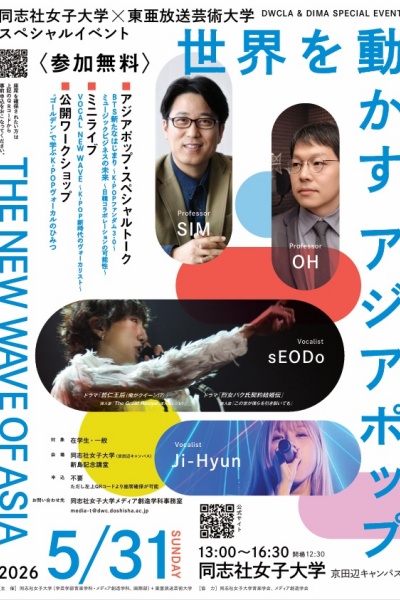
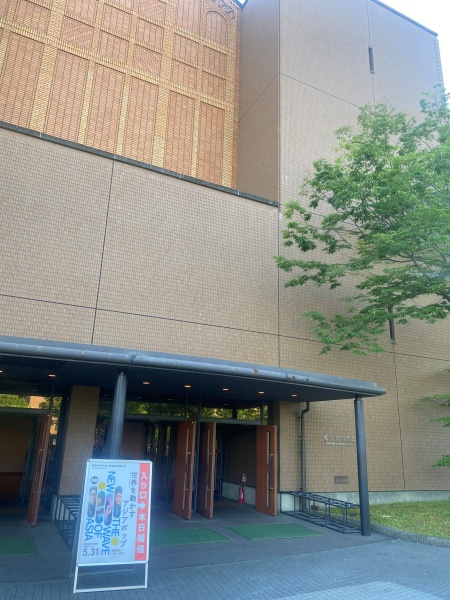
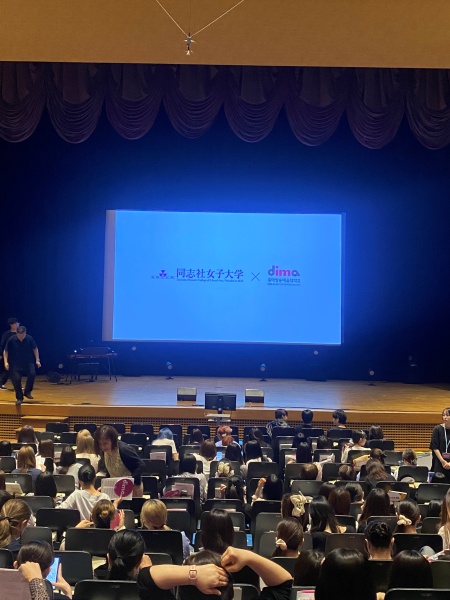
I attended the special event “The New Wave of Asia: Asian Pop Moving the World,” jointly hosted by Doshisha Women’s College of Liberal Arts and Dong-Ah Institute of Media and Arts(DIMA)[*1] The venue was filled with an energetic atmosphere, as people gathered to experience the forefront of music and culture.
DIMA is a top-tier entertainment specialty university in Asia, producing many K-POP artists and video producers. The Academy Award-winning film "Parasite"[*2] and the globally viral hit "Squid Game"[*3] were also filmed at the special studio within DIMA.
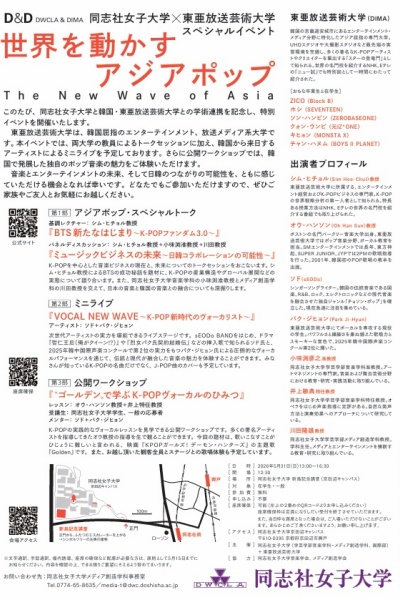
In the keynote lecture, Professor Shim Hee-chul discussed the evolution of K-POP fandom, using BTS as a central example. What struck me most was the idea that today’s fans are no longer passive supporters; they actively promote their favorite artists, strategically influence rankings and visibility, and support them as if their success were their own. It was also fascinating to learn that fan-created goods and content can spread widely and eventually become officially recognized, forming a unique and dynamic cycle that distinguishes K-POP from traditional music cultures.
The panel discussion that followed was equally engaging. A particularly interesting topic was the similarity between Anseong in Korea and Kyoto in Japan, both regions with deep-rooted traditional cultures. The discussion highlighted how contemporary pop culture can coexist with and even revitalize historical heritage. One surprising point was that as K-POP has gained global popularity, more young Koreans have started visiting museums and reconnecting with their cultural heritage. Notably, the National Museum of Korea in Seoul now ranks third in the world in terms of visitor numbers, [*4] which I found remarkable. This demonstrated how pop culture can serve as a gateway to deeper cultural understanding.
In the second part, a mini live performance by sEODo and Park Ji-hyun captivated the audience with their powerful vocals and expressive performances. Their set included not only K-POP but also J-POP covers, creating a sense of connection that transcended national boundaries.
The third part featured an open workshop, where participants could observe practical vocal training led by top instructors. Audience members were also invited to join, offering a rare opportunity to experience K-POP vocal techniques firsthand. Through the challenging song “Golden,” [*5] I was able to appreciate the high level of skill and expressive ability required of professional artists.
K-POP is no longer just a music genre; it is a dynamic cultural force that integrates fans, education, industry, and even traditional culture. This event provided a powerful and inspiring glimpse into that evolving landscape.
(Global Community Editor in Chief, Kazumi Miyazaki)
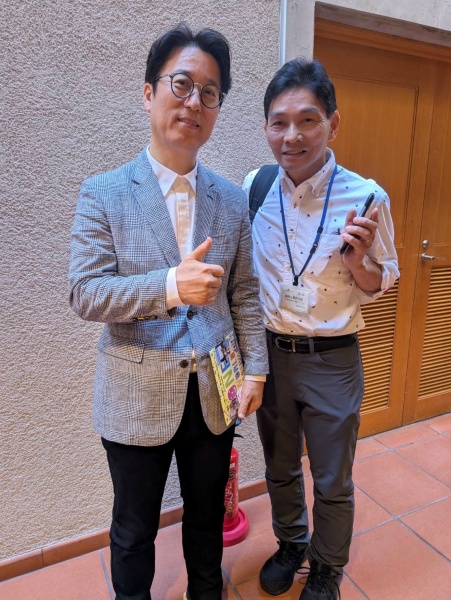
with the speaker ,Professor Shim Hee-chul