Defining the "Social Problem-Solving Business" Required in a Global Society
Defining the "Social Problem-Solving Business" Required in a Global Society
The Path to International Talent: Learning from HNI's "Sama-Sama" Model
When modern university students envision a global career, the stage of simply pursuing language proficiency or overseas work experience has already passed. What the world urgently requires now is the ability to highly integrate "the resolution of social issues" with "sustainable economic viability"—in other words, the capacity to design social businesses.
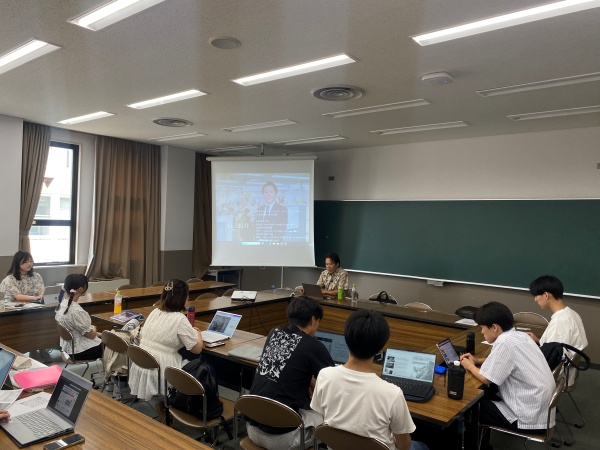
"On June 30th, President Tetsuro Haruyama of HNI (Handi Network International[*1] ) gave a special lecture to 3rd-year students at the School of Business Administration, Kwansei Gakuin University.With the permission of Professor Masayuki Furusawa, a leading scholar in International Human Resource Management, I conducted an interview to explore HNI’s unique approach to global talent development."
HNI is a pioneer in addressing Japan’s pressing shortage of caregiving personnel by building a "Corridor of Trust" with Indonesia. Their example vividly demonstrates how fragile the old model—treating developing countries merely as sources of labor—is, and how a strategy based on equal partnership can build a robust business model.
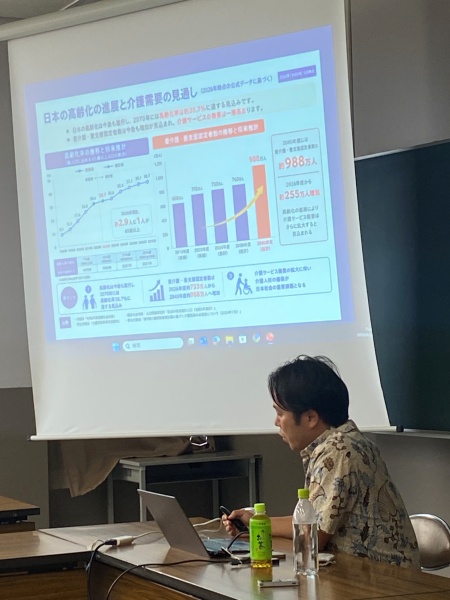
1. The Wall of "Personnel Retention" in Japanese Caregiving
While the use of foreign talent is expanding in the Japanese caregiving industry, the front lines are often blocked by the high wall of "retention". There is a current reality where the receiving side prioritizes short-term recruitment cost reduction, forcing structural disadvantages upon foreign workers.
An analysis of the primary factors leading to resignation reveals three main points:
• Psychological Pressure from Large Debts (The Broker Issue): By incurring significant debt for education fees and commissions before coming to Japan, the anxiety over repayment strips away mental peace. This leads to resignations or disappearances as workers seek higher wages elsewhere.
• The isolation caused by language barriers: When workers struggle to communicate, it creates friction and misunderstandings in the workplace. These daily struggles not only damage professional relationships but also deeply hurt the workers' self-confidence, leaving them feeling isolated and undervalued."
・The lack of post-entry life support: Many issues are difficult to discuss with on-site staff, and there is a shortage of consultation desks where workers can casually seek advice on personal matters, such as romantic relationships, in their native language."
2. HNI’s Unique Talent Support Scheme: Achieving a Remarkable "3.1% Turnover Rate"
HNI has built a unique model focused on retention that handles everything from recruitment and education to aftercare in an integrated manner. Notably, since the resumption of entry in March 2022 following the pandemic, they achieved a 3.1% turnover rate as of the end of April 2026—a startling figure where the primary reasons for leaving were lifestyle changes such as marriage.
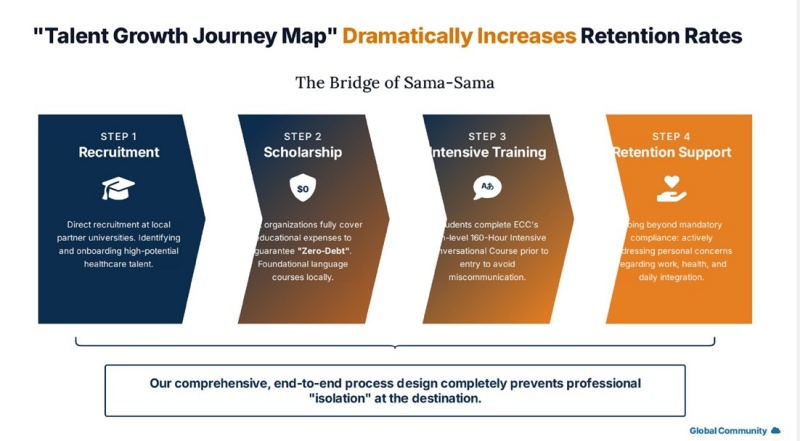
1. Governance with National Governments and Educational Institutions: HNI signed a Memorandum of Understanding (MOU) directly with the Indonesian Ministry of Health. By directly recruiting excellent students with medical knowledge from 38 national nursing colleges under the Ministry’s umbrella, they completely eliminate opaque brokers.
2. Guaranteeing Economic and Educational Safety: They recommend a "Scholarship Program" where the receiving corporation bears the education costs, achieving "Zero Debt" for the candidates. This is a deciding factor in attracting top students aiming for overseas careers. Furthermore, candidates receive six months of education at partner schools.
3. Intensive Japanese Conversation Program: The six months leading up to visa acquisition are spent in a curriculum of intensive Japanese study, including 160 hours of intensive conversation lectures by ECC. This establishes the infrastructure to prevent miscommunication on-site.
4. Pursuing Quality Life Support: Going beyond the mandatory support required of a Registered Support Organization, HNI has built a 24-hour system to address the daily private concerns of their 20-something "Sama-Sama Care Workers" (HNI's unique title), including life, romance, and illness. By resolving problems before they become serious, they foster strong relationships of trust.
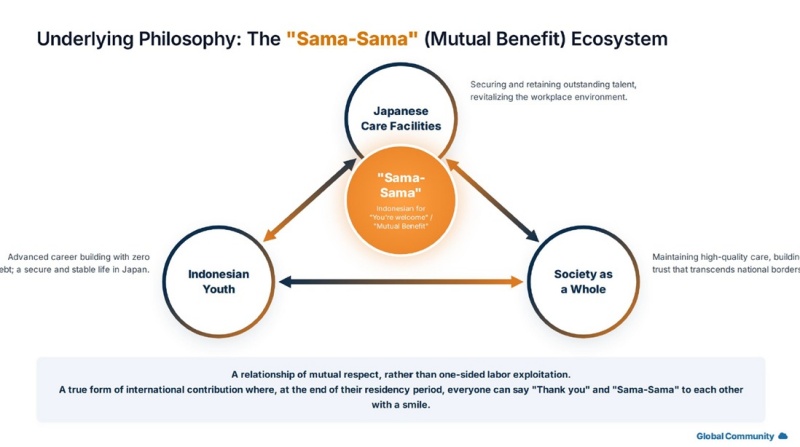
The Spirit of "Sama-Sama": Multicultural Coexistence Fostered by Mutual Respect
The "OS" supporting this high retention rate is the spirit of "Sama-Sama," which means "you’re welcome" or "equally/likewise" in Indonesian. it refers to a relationship where both the receiving side and the workers say "thank you" to each other. This mindset is not mere moral rhetoric; HNI’s model proves that respecting the partner and supporting their growth and happiness results in the high economic rationality of a low turnover rate.
Comparison of Performance: Proof of Concept (PoC) for the Business Model
|
Item |
Specified Skilled Worker (SSW) 1 (Caregiving Sector) |
HNI SSW Caregivers (Sama-Sama Model) |
|
Turnover Rate |
10.6% |
3.1% |
|
Breakdown |
Approx. 2,800 out of 26,000 resigned |
9 out of 295 resigned (career changes for marriage, etc.) |
|
Period |
Apr 2019 – Nov 2022 (Cumulative) |
Mar 2022 – Apr 2026 (Cumulative) |
Source: Immigration Services Agency "Operational Status of the Specified Skilled Worker System" (as of end of Nov 2022).
Founder’s Vision and Dignity: HNI's founder, Mitsuru Haruyama, developed progressive muscular dystrophy at age 24. Despite losing motor function from the neck down, he continued to overturn conventions in Japanese caregiving as the "Wheelchair President". In 2003, he was selected as one of the "Stars of Asia" by BusinessWeek. His ambition to "protect the dignity of the user" has been inherited in the current stance of respecting foreign talent not merely as "labor," but as "Equal Partners" who support the lives of Japan’s elderly.
*Message to Next-Generation Global Leaders*
Drawing from HNI’s case, Haruyama presented four guidelines for building an international career:
1. Construct a "Corridor of Trust": Business stability is determined by building transparent governance (systems) with local governments and educational institutions, rather than relying on one-off transactions.
2. Design Psychological Safety: Systems like "Zero Debt" and "thorough language education" must be designed so the partner can demonstrate their true abilities. This is not "charity"; it is an "investment" to win.
3. Shift the Mindset: View different cultures not as something to "utilize," but as subjects for "coexistence." Having the "Sama-Sama" spirit maximizes individual growth and organizational sustainability in a global society.
4. Make "Social Problem-Solving" the Core of Your Career: This is not philanthropy. The higher the difficulty of the problem, the more the mechanism to solve it becomes a robust business model that is difficult to imitate. It is about eliminating social negatives and creating a future where everyone involved can say "Sama-Sama."
-"Professor Furusawa highlighted that we must view 'outward globalization' and 'inward globalization' as interconnected. He encouraged students to foster a deeper sense of mutual understanding by engaging with people from across Asia—our rapidly developing neighbors—through active exchange, both within Japan and overseas.".-
"The participating students of the Furusawa Seminar (Mr. Kashihara, Mr. Setoda, Ms. Kanaoka, Ms. Arimoto)"throughly prepared with distributed materials, asked insightful and essential questions regarding Japanese staff’s reactions at sites receiving foreign workers for the first time, considerations for facility residents and their families, and how to face country risks.
In response, Mr. Haruyama shared that to alleviate anxiety, they have facility leaders visit Indonesia to see the local education system and interview candidates directly. He also introduced that HNI’s Indonesian employees conduct training sessions for Japanese site staff to prepare for the reception.
Furthermore, he noted that Indonesian people, many of whom are Muslim, naturally treat the elderly with great respect, often kneeling to speak with them without being taught. The students were impressed by these fine details and the cultural differences.
"In July, students of the Furusawa Seminar will interview HNI-supported Indonesian care staff. Additionally, in August, they will join a Southeast Asia study tour (visiting Indonesia and Vietnam) led by Professor Furusawa as part of the curriculum."
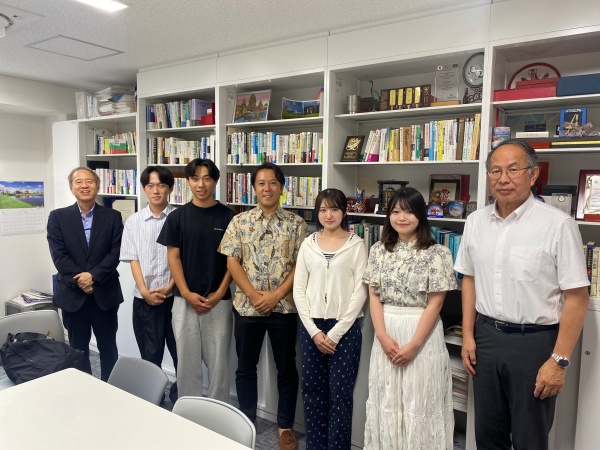
From left to right: Professor Furusawa, Mr. Kashihara, Mr. Setoda,President Haruyama, Ms. Kanaoka, Ms. Arimoto, and Mr. Ogawa, Advisor to HNI.
“We called for labor, but people came.”*
Like Haruyama’s management stance—willingly taking on hardship to solve problems and fostering the "Sama-Sama" spirit through daily interaction with the people of Asia
—is this not the true form of the global leader expected of students today?
*“This quote is by the Swiss author and playwright Max Frisch. In 1965, against the backdrop of the issues surrounding the acceptance of foreign workers (Gastarbeiters) in Europe, he stated, ‘We called for labor, but people came’ (Man hat Arbeitskräfte gerufen, und es kamen Menschen), sounding an alarm against society’s tendency to view human beings solely as an economic workforce.”