International Red-White Singing Festival Audition in Los Angeles &Little Tokyo
- 2026/09/04 13:55

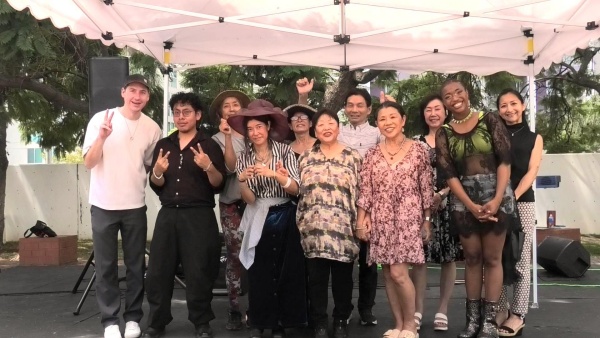
The International Red-White Singing Festival Audition in Los Angeles was held on August 29, 2026, in front of the Aratani Theatre in Little Tokyo, Los Angeles, with the cooperation of the Little Tokyo Farmers Market, the Los Angeles Friends of the Japan Singers Association, and FUJISCHOOL.
This audition was conducted monthly from January to July in an open-mic format, and four participants selected through this process performed Japanese songs they had diligently practiced, competing for the right to represent Los Angeles at the main festival in Japan.
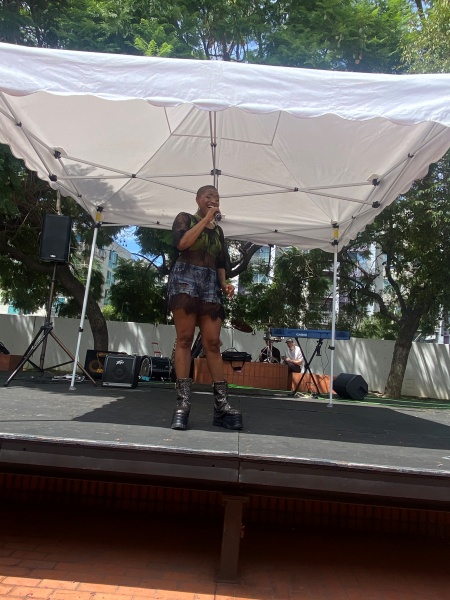
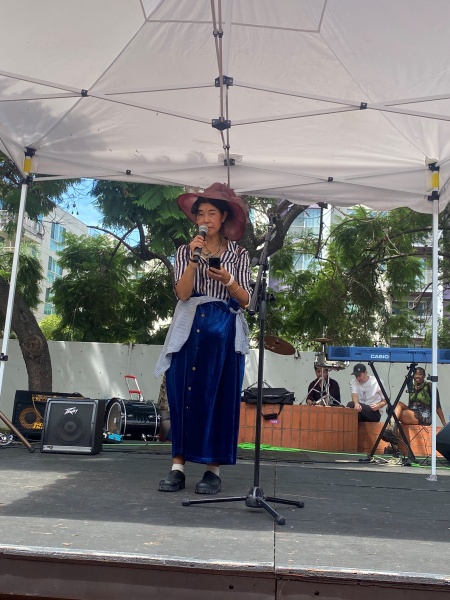
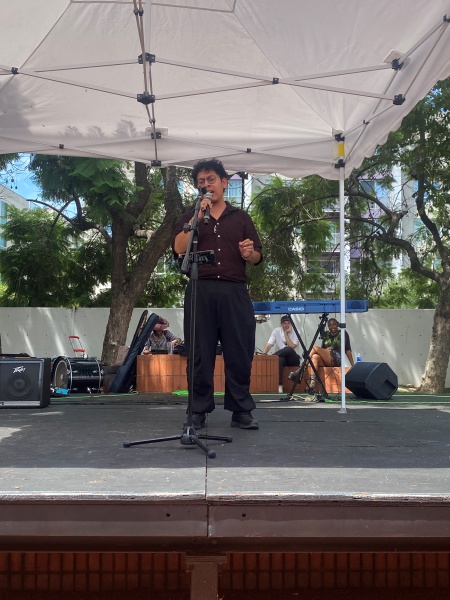
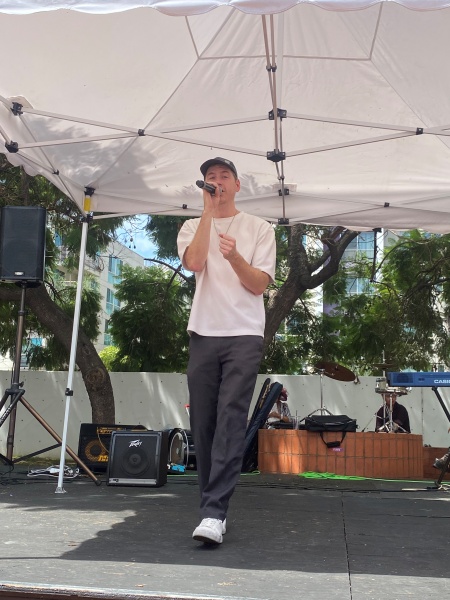
As a judge, I had heard about the participants’ deep commitment to this event during preliminary Zoom meetings, so it was truly difficult to select only one winner ultimately.
The participants came from diverse backgrounds: some had been inspired by anime since childhood and began singing Japanese songs; others enjoyed Japanese city pop, which has recently gained popularity in the U.S., and relieved work stress by singing Japanese songs alone at karaoke bars; and there were those learning Japanese with help from their Japanese girlfriends, even writing their own Japanese lyrics.
Among the people I met at Japanese language schools, there was a man who had previously lived at a U.S. military base in Okinawa and, having had many positive interactions with Japanese people, decided to learn Japanese. There was also a woman who began studying Japanese because she wanted to speak more with her host mother during a university homestay in Japan. Many such cases showed that Americans’ personal experiences in Japan often served as the starting point for their Japanese language learning, which was very impressive.
Although public Japanese language classes are decreasing within the United States, interest in private Japanese lessons, online courses, and self-study through apps has been rising due to the global “Japan boom.”
Japanese is not a practical language like Spanish or Chinese, and the number of speakers worldwide is relatively small. However, the significant increase in people who love “Japanese culture,” including anime and manga, or who simply admire “Japanese people” and “Japan” itself, is undoubtedly a major factor behind this trend. Through interactions with many Americans at Japanese language schools in Los Angeles and at this singing festival audition, I strongly felt this reality.
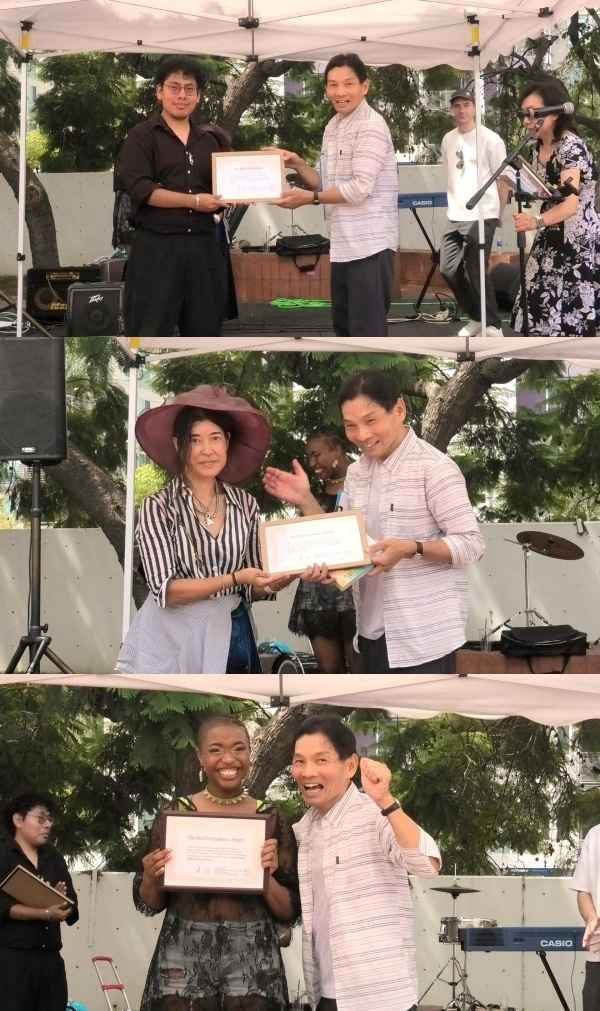
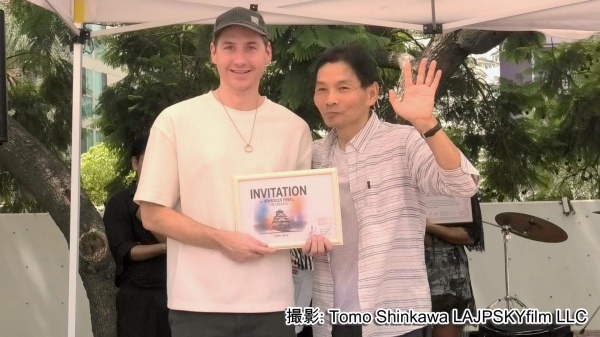
Ultimately, Markus Kley, who performed an original song with lyrics and music composed by himself, was chosen as the Los Angeles representative to compete in the main festival to be held in Osaka.
Like the performer from São Paulo, Markus is scheduled to stay in Osaka for about one week. During his stay, he will interact with volunteers and event staff, and a program has been arranged for him to tour Osaka with guidance from student interpreter volunteers.
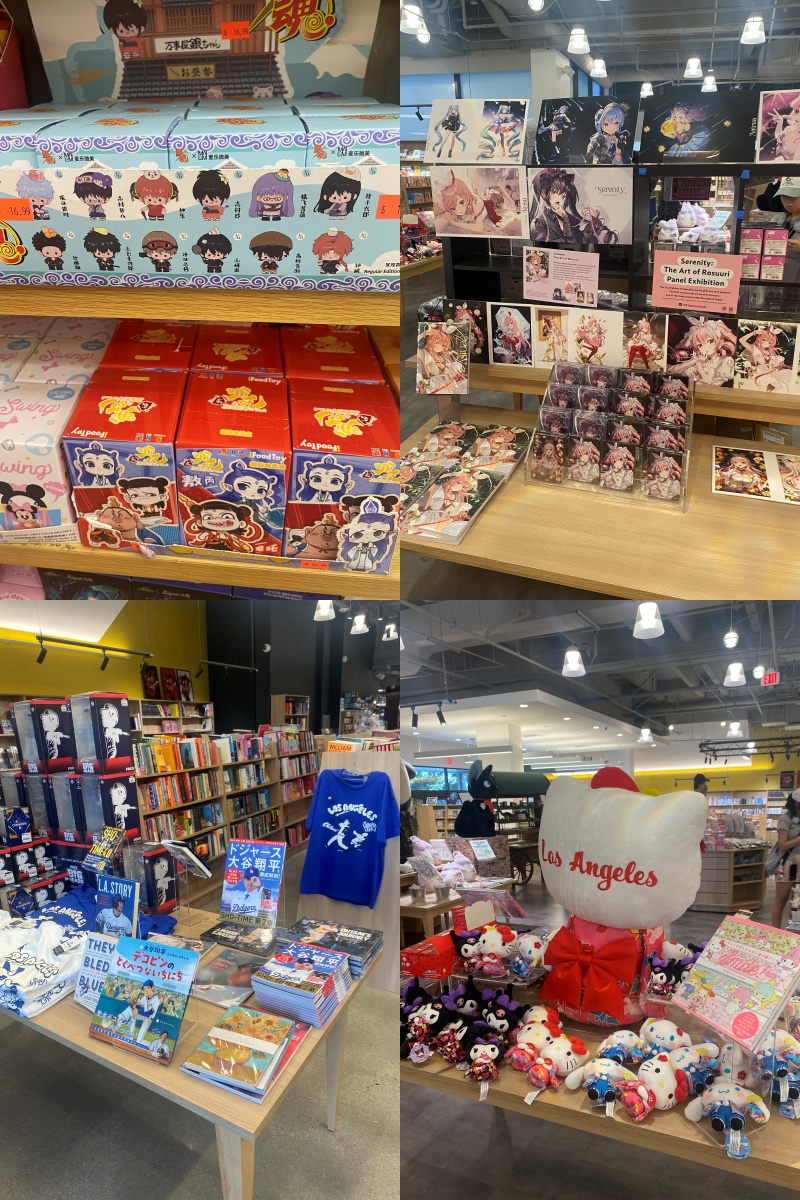
Little Tokyo features shops selling anime character goods, Japanese-style game centers, Japanese bookstores, and other attractions, making it a place where Americans can easily experience Japanese subculture. At the same time, for Japanese people, it is also a neighborhood where one can feel the resilience of Japanese Americans who have lived through diverse experiences in the United States.
Thus, while Little Tokyo is rooted in the history of Japanese Americans, it has also become a kind of “Akihabara within America” for other Americans, evolving into a neighborhood with new appeal that transcends generations and nationalities.
At the singing festival audition, it was deeply gratifying as an organizer to see senior-generation Japanese Americans warmly watching Americans who purely love Japan perform Japanese songs.
As I stated in my opening remarks as an organizer, “The International Red-White Singing Festival is not a competition to judge superiority or inferiority, but a festival honoring those who overcome the challenge of singing in a foreign language and stand on stage.” Our goal is for this event to become firmly rooted in Little Tokyo as a place of exchange that transcends generations and ethnicities, connecting “Americans who love Japanese culture such as anime and subculture” with “Japanese Americans from diverse backgrounds.”
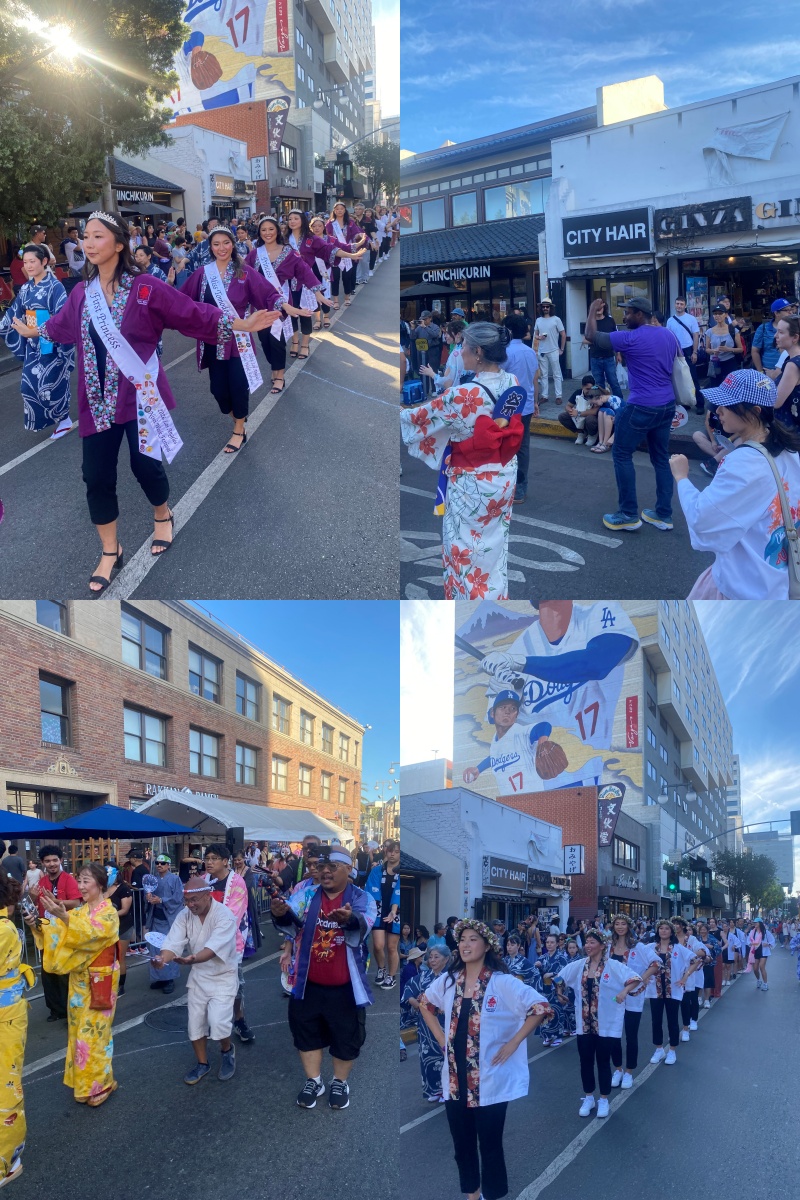
Coincidentally, every August, Little Tokyo hosts NISEI WEEK, a traditional festival cherished deeply by Japanese Americans. Established in August 1934, it annually celebrates Japanese American culture, history, and traditions. I also participated in the Bon Odori parade on the final day, August 23, together with students and teachers from Japanese language schools,FUJISCHOOL.
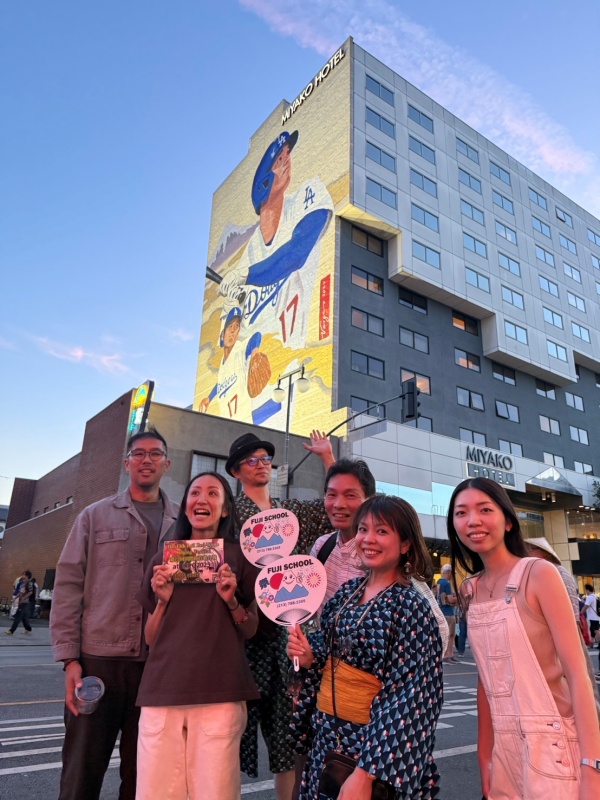
(Together with FUJISCHOOL teachers and students)
In addition to dances from Okinawa, Hokkaido, and the Tohoku region, American participants also enjoyed “BONODORI” to city pop tunes and even Michael Jackson songs.
I look forward to returning to Little Tokyo next August for both the International Red-White Singing Festival Audition and NISEI WEEK.
(Kazumi Miyazaki, Founder of Global Community and Representative of the International Red-White Singing Festival Executive Committee)