Shinto Culture Connecting International Exchange and Reconciliation at Pearl Harbor
- 2026/07/06 09:00

Shinto Culture Connecting International Exchange and Reconciliation at Pearl Harbor
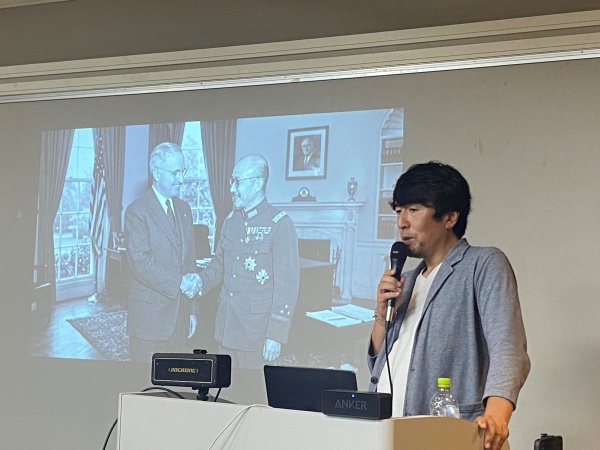
Hidetoshi Tojo has long presented Shinto culture not merely as a Japanese tradition, but as a shared language through which Japan can be understood by people around the world. In international exchange, it is not enough to translate words; one must also understand cultural backgrounds and communicate one’s own culture clearly. In that sense, Tojo’s work quietly shows the importance of global literacy.
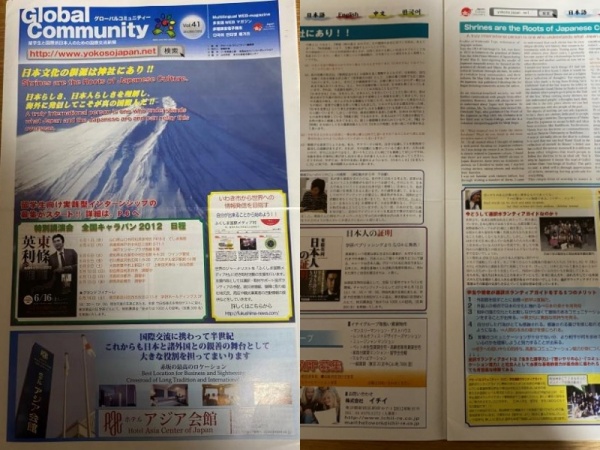
For many years, the international exchange media Global Community has also carried his ongoing column on Shinto and Japanese culture. In those writings, he has not only introduced Japanese traditions, but also explained how learning culture can deepen respect for others and strengthen dialogue. For readers, it has offered an opportunity to feel closer to Japanese culture while also gaining a broader understanding of the world.
As the Representative Director of the General Incorporated Association for International Cultural Education Promotion, he has continued working to deepen understanding of Japanese culture. He has also helped build frameworks for learning about shrines and Shinto, and through his overseas experiences, he has emphasized that knowing one’s own culture helps foster respect for other cultures. In international society, what matters is not only knowledge, but also the willingness to listen and accept others.
His ideas also support the development of younger generations through GC Student Interpreter Volunteer Guide, where he serves as an advisor. The role of an interpreter or guide is not simply to translate words. It is also to convey historical and cultural context, as well as the atmosphere of the place. Through such experiences, empathy and understanding naturally grow. Here too, we see the idea that learning Japanese culture can strengthen one’s ability to engage in dialogue with the world.
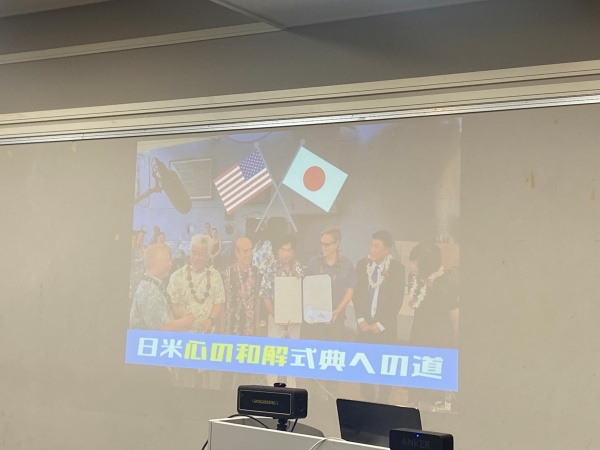
These efforts came to a remarkable expression at the Spiritual End of the War Peace Flame Ceremony held in Pearl Harbor, Hawaii, on May 24, 2026. At the Pearl Harbor National Memorial, a large rainbow appeared over the battleship Missouri, creating a quiet and deeply moving atmosphere. The day began with a visit to the USS Arizona Memorial, where prayers were offered for those who lost their lives in the war, followed by a presentation of origami cranes.
During the ceremony, Tojo was given about ten minutes to speak, and he conveyed his thoughts in English with sincerity. He also joined the “Heart Reconciliation” signing together with Paul Dyson, Chief Operating Officer of the USS Missouri Memorial Association; Masahiro Sasaki, the brother of Hiroshima atomic bomb victim Sadako Sasaki; Akie Abe, widow of former Japanese Prime Minister Shinzo Abe; and Clifton Truman Daniel, grandson of former U.S. President Harry S. Truman. It was a meaningful moment that looked toward the future without forgetting the past.
In the afternoon, another signing ceremony was held inside the USS Missouri. That was the historic site where Japan signed the instrument of surrender after World War II. Seeing the photographs from that time and the marks left on the ship made the weight of war feel real once again. In that place, it became especially clear how important it is to move beyond past conflict and connect it to peace.
The following day, he was also able to take part in the annual lantern-floating ceremony at Pearl Harbor. Although participation had seemed difficult at first, an unexpected connection allowed him to receive one lantern. After writing a message on it and sending it out to sea, he felt peace and prayer quietly spread across the water.
This journey to Hawaii was far more than a ceremonial visit. It was a profound experience that connected history, culture, prayer, and hope for the future. Preserving tradition and opening it to the world are not contradictions. Knowing our own culture, understanding others, and wishing for peace—this accumulation of small efforts is what international exchange truly needs.